

Select Page
Shoebill: Facts, Classification, Reproduction, Habitat, Diet and More
Shoebill Stork: Africa’s Silent Wetland Hunter
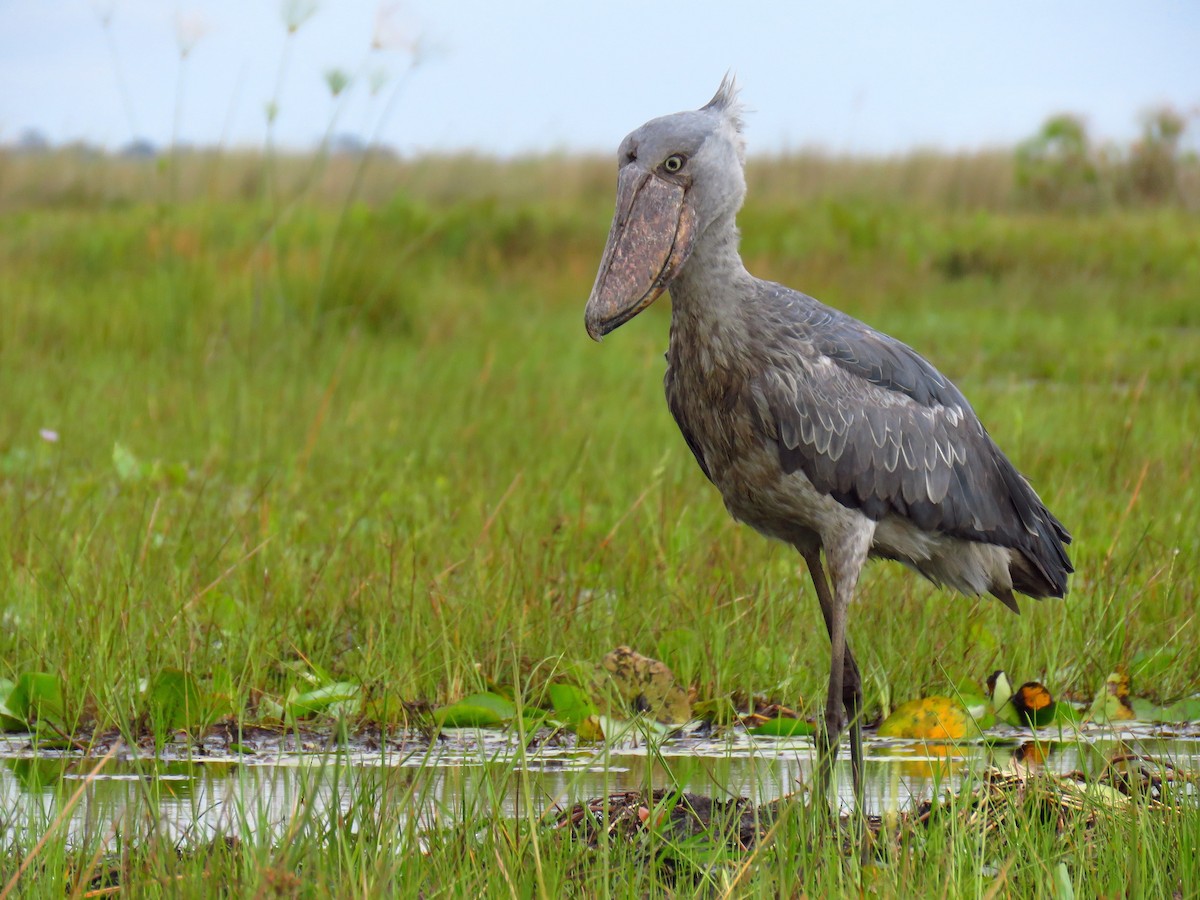
Your first real meeting with a Shoebill Stork does not feel like meeting an ordinary bird. The Shoebill Stork stands there in the swamp, tall and serious, with that huge shoe-shaped bill and steady eyes, and you find yourself staring longer than you expected.
At your first glance, you may be intimidated and even forget to take a photo for a moment, because you are busy trying to decide whether it looks more like a cartoon character or a prehistoric creature that somehow stayed behind.
If you are visiting Africa for the first time, like most of our guests who usually come from a busy city in the United States, Latin America, Europe, Asia, and some parts of Africa, an encounter with this giant-intimidating bird quietly challenges your idea of what a bird can be.
It is a large, intimidating, powerful, and unignorable giant.
It prefers to stand still, sometimes for long minutes, watching the water with a focus that makes you feel a little self-conscious about your own short attention span. You might shift on the boat while the Shoebill barely moves at all.
What makes the Shoebill Stork unique is not only its appearance, although that bill is hard to ignore. It is the combination of stillness, strength, and a kind of quiet confidence. The bird is rare in the wild and tied closely to specific wetlands, so when you see one, you know you are in a special place.
When you meet one in any of our Uganda safaris, just know you are sharing space with a hunter that has found a way to thrive in slow, swampy waters that many people would usually overlook.
After meeting these giants, many visitors say that the Shoebill Stork becomes the one bird they keep remembering after their trip. Lions roar, elephants trumpet, hippos grunt, and all that is impressive, of course.
Yet this single tall bird, standing almost like a statue in a remote marsh, sinks into your memory differently. You remember the silence around it, the feeling of waiting, and the sudden burst of action when it finally strikes.
Recommended Safaris

14 Days
Private
14-Day Uganda, Congo & Rwanda Gorilla Trekking & Wildlife Safari
from
$ 4900
per person
The Shoebill Stork Classifications
Class: Aves
Order: Pelecaniformes
Family: Balaenicipitidae
Genus: Balaeniceps
Species: Balaeniceps rex
The Shoebill Behaviour
When you watch a Shoebill Stork for more than a few minutes, you start to notice how patient it is, and that patience feels almost like a personality trait. The bird stands in shallow water among papyrus or reed beds, body upright, bill pointed slightly downward, eyes fixed on one small patch of water.
Your guide may whisper information, other guests may shift for a better camera angle, but the Shoebill keeps holding the same position, as if time is moving at a different speed for it.
One relationship the Shoebill Storks has with other giants, is – it’s usually solitary, which affects the way they move and behave in their wetland homes.
With that kind of height, weight and general body size, the shobebill isn’t so much afraid of many predators.
You can witness this by seeing a single bird within its own demarcation of swamp, pacing slowly along narrow channels, taking a few careful steps, then freezing again to watch for prey.
When two Shoebills share the same area, there can be some tension at the edges of their spaces, small shifts in posture or distance that hint at silent negotiations over who gets which corner of the marsh.
When it comes to communications, iinstead of singing bright songs or performing aerial displays like most birds, Shoebill Storks often rely on body language and a distinctive bill clattering sound.
During certain social moments, especially around nests or during pair interactions, they rapidly open and close their bills, producing a loud, mechanical rattle that carries across the water. If you hear this sound for the first time, it can surprise you, because it does not match the quiet, still pose you saw a few minutes earlier, and your brain needs a moment to link the two.
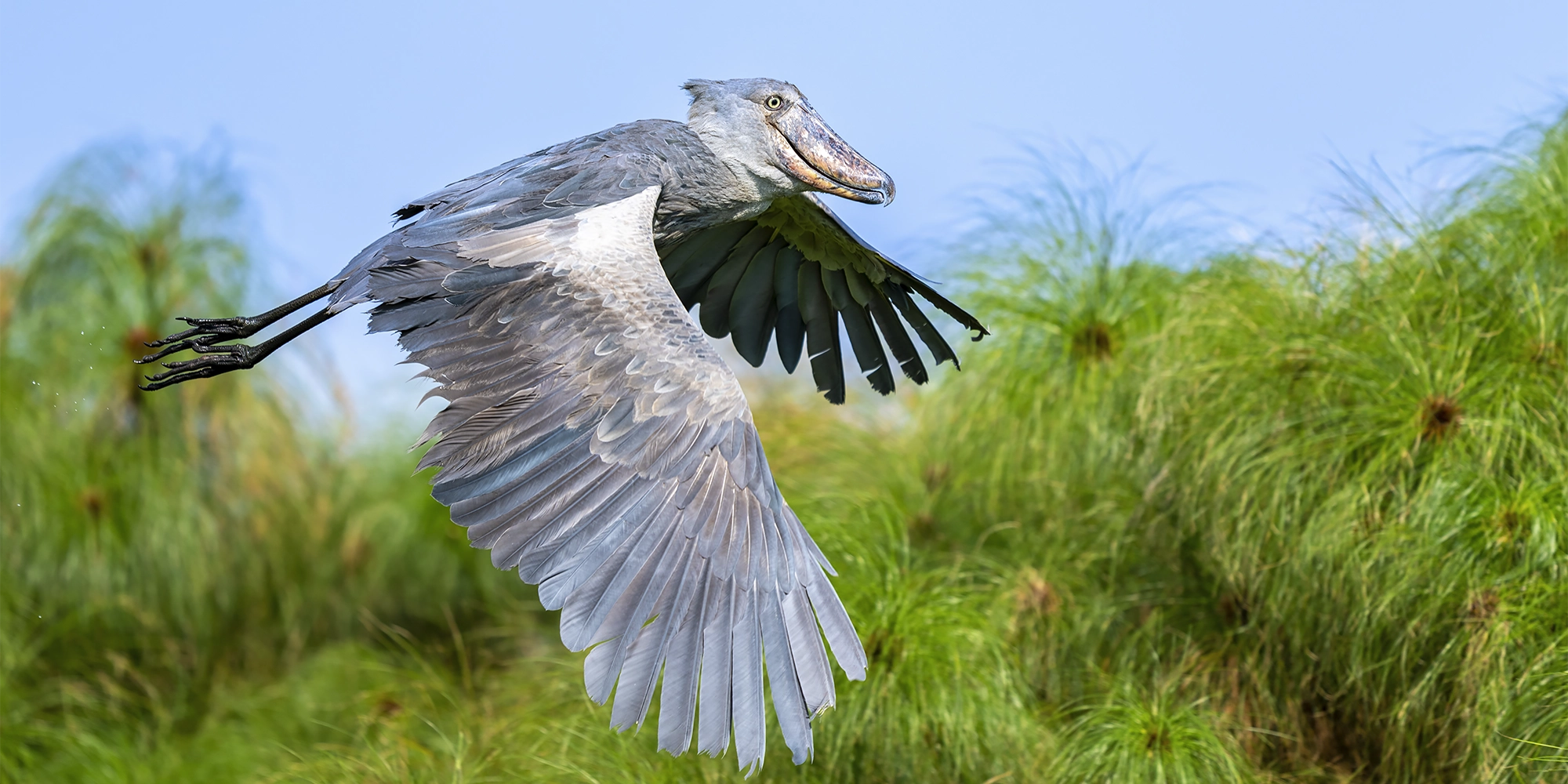
In the air, the Shoebill Stork changes character again. Take off can look a little heavy, as if the bird needs a few strong wing beats to convince itself that flying is worthwhile today. Once it gains height, though, the Shoebill glides with broad wings and a drawn-back neck, looking almost like a distant relic from another time. You might find yourself following it with your eyes longer than you expected, watching that large shape pass across the sky until the reeds swallow it up again.
The Shoebill Stork Gallery
The Shoebill Stork Diet
The Shoebill Stork’s hunting style is a slow story that builds toward a sudden, dramatic moment. You watch the bird stand in still water for what feels like forever, and you almost start to believe that nothing will happen. Then, without warning, the Shoebill launches its head forward, bill plunging into the water with a powerful splash that breaks the quiet and sends droplets flying in a wide circle.
Shoebill Storks specialize in large fish, especially lungfish and catfish that live in muddy, low-oxygen waters. These fish need to come up for air, and the Shoebill uses that habit in its favor. It waits for the right movement, the slight disturbance at the surface, then strikes with that wide, shoe-shaped bill that acts almost like a scoop. The bird lifts its head filled with a mix of water, mud, plants, and hopefully a strong, wriggling fish. You may see it shake off extra mud, reposition the catch, and then swallow with a single deliberate gulp.
Their diet can extend beyond fish when opportunities appear. Shoebill Storks sometimes take frogs, water snakes, young turtles, and even small crocodiles. Hearing this list for the first time may change how you think about this quiet bird. That heavy bill is not only a funny shape for tourists to photograph. It is a serious tool that lets the Shoebill handle prey that many other birds would avoid. Once you know that, the still figure in the swamp feels even more impressive.
The Shoebill Stork Reproduction
The breeding life of the Shoebill Stork unfolds in remote wetlands that are often difficult for people to reach. A pair usually builds a large nest out of reeds and grasses, placed on a floating or slightly raised platform within the swamp. When your guide points to a nesting area in the distance, you can picture a wide, damp mat of green and brown plant material, surrounded by shallow water that gently shifts with every breeze. It is not a neat, clean place, but it is exactly where the Shoebill prefers to raise its young.
Shoebill Storks typically lay one to three eggs, yet in many cases, only one chick survives to grow strong and independent. The older or stronger chick often receives the most food and attention, while the weaker sibling may not make it. For many visitors, this detail feels uncomfortable at first, especially if you are used to children’s stories where all the young ones thrive. Here, you meet a more complex side of nature, where giving the greatest chance to one chick means investing energy wisely in a harsh environment, even though the process feels tough to watch in theory.
Both parents share responsibility for raising the chick that survives. They bring fish and other prey to the nest in their bills, carefully positioning the food so the young bird can swallow. During the hottest hours, adults shade the chick with their wings, and in some cases, they pour water over it to help with cooling. When you hear these small details, you may picture a human parent holding an umbrella over a child or adjusting a hat in strong sunlight. That small echo between species makes the Shoebill family life feel more familiar and, peacefully, touching.
Recommended Safaris
8 Days
Private
8 Days Murchison Falls, Gorilla, Chimpanzee & Queen Elizabeth Safari
from
$ 1790
per person
8 Days
Private
8 Days River Nile, Murchison Falls & Kidepo Wilderness Safari
from
$ 2400
per person
11 Days
Private
11 days Uganda Premium Gorilla, Wildlife & River Nile Adventure
from
$ 2900
per personThe Shoebill Stork FAQs
What makes the Shoebill Stork different from other large birds?
The Shoebill Stork feels different from the moment you see it. Its huge shoe shoe-shaped bill, almost motionless posture, and intense stare create a strange mix of humor and respect. You might smile first, then fall quiet as you notice how carefully it studies the water.
Most large birds move in groups, call loudly, or patrol open areas. The Shoebill Stork prefers solitude in dense wetlands, spends long periods standing still, and focuses on single, deliberate strikes. That slow, focused way of living gives your time with it a very personal, almost private feeling.
Where can you see a Shoebill Stork in Africa, and what is the experience like?
Shoebill Storks live in remote swamps and marshes across parts of East and Central Africa, especially where there are wide papyrus beds and slow, shallow channels. You usually reach them by small boat or canoe, guided by someone who knows the hidden paths and quiet corners of the wetland. The journey itself often feels like entering a calmer, older world.
When you search for a Shoebill Stork, you spend time gliding along narrow water lanes, listening to frogs, birds, and the soft splash of paddles. Your guide scans the reed edges and open pockets of water, pointing out shapes that might be logs or birds. When the Shoebill finally appears, you feel a small rush because you realize how much quiet effort went into that single moment.
Is the Shoebill Stork dangerous for visitors watching from a boat or shore?
The Shoebill Stork looks powerful and a little intimidating, especially when you focus on the size of that bill. In practice, healthy wild Shoebills show very little interest in people as targets or food. They mainly want space, quiet, and enough fish in their chosen patch of swamp.
If you stay in the boat, follow your guide’s instructions, and keep a respectful distance, you are highly unlikely to face any problem from the bird itself. The real concern is the other way around. Boats that push too close or crowds that shout and wave can stress the Shoebill Stork and disturb sensitive nesting areas.
Why is the Shoebill Stork considered rare, and is it threatened in the wild?
Shoebill Storks need a very specific type of habitat. They depend on large, undisturbed wetlands with deep vegetation, steady water levels, and plenty of fish. When wetlands are drained, polluted, or converted for farming and settlement, the bird loses safe feeding and nesting sites. That slow loss adds up over time and makes the species vulnerable.
In some regions, unregulated tourism, egg collection, and capture for trade add extra pressure. When you hear this, your sighting gains a different weight. You are not looking at a common backyard bird; you are looking at a specialist that survives in fewer and fewer places. Travel that supports careful conservation efforts helps those remaining habitats stay alive.
Why is the Shoebill Stork’s bill so large and strangely shaped?
The bill looks almost comical when you first see it, like a big wooden shoe attached to a serious face. That shape has a clear purpose. The wide, deep design works like a scoop, letting the Shoebill Stork grab lungfish, catfish, and other large prey together with water and mud in one fast strike.
Inside that broad outline, the bill is strong and sharp, with a pronounced hook at the tip. This hook helps the bird control slippery, powerful fish and cut them if needed before swallowing. So the same feature that makes everyone reach for their cameras is also a finely tuned feeding tool shaped by the wet, murky world the Shoebill depends on.
What does a typical Shoebill Stork viewing trip feel like for a first-time visitor?
For many people, a Shoebill Stork trip starts early in the morning, when the air is cooler and the light is soft. You sit in a small boat, life jacket on, camera ready, gliding slowly into the marsh. The noise of the road fades, replaced by birds calling, water lapping, and sometimes an uncomfortable but honest silence while everyone searches.
When the guide finally points and whispers, your eyes follow the gesture, and there it is, standing still among the reeds. The boat drifts quietly, and you feel your own body matching the calm pace of the bird. You might take photos, of course, but the moment that stays with you is often the simple act of watching something that seems completely at ease with waiting.
Can children and older travelers enjoy a Shoebill Stork experience safely and comfortably?
Children and older travelers can both enjoy seeing a Shoebill Stork, as long as the trip is planned with comfort and safety in mind. Boats with stable seating, life jackets, and a calm, experienced guide make a big difference for families and older guests. The actual viewing usually does not require intense physical effort, which helps.
For children, the Shoebill Stork can become a favorite story later, partly because it looks almost like a character from a book. For older travelers, the slow, quiet approach and focus on one rare bird can feel deeply relaxing. It is helpful to prepare everyone for some waiting time, so the stillness becomes part of the experience, not a surprise.
How should you behave near a Shoebill Stork to protect it and its habitat?
The simplest way to protect a Shoebill Stork is to respect its space. Stay seated in the boat, keep your voice low, and avoid sudden gestures that might startle the bird. If it shows signs of discomfort, such as walking away or lifting its wings repeatedly, your guide may decide to pull back a little. That decision helps keep the bird’s stress levels low.
Choosing responsible operators also matters. When you book, you can ask how close boats normally go, whether they avoid nesting spots, and how they support wetland conservation. By rewarding careful behavior with your time and money, you help create a travel culture where the Shoebill Stork is valued as a living neighbor rather than a trophy photograph at any cost.
Conclusion
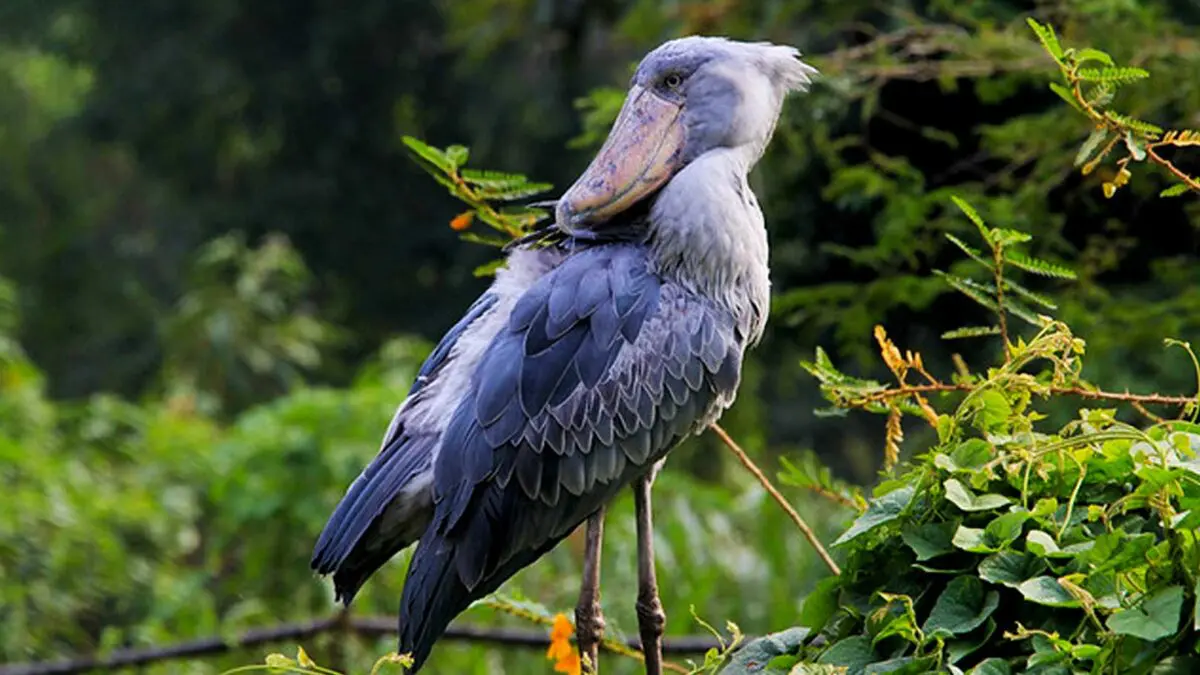
Spending time with a Shoebill Stork in its swamp home offers more than a tick on your bird list; it offers a different rhythm. You sit in a small boat or stand quietly on a viewing platform, breathing in warm, damp air, listening to distant frogs and insects, and watching one tall bird that is in no hurry at all. Somewhere in that slow scene, your own thoughts slow down as well, and you realize you are completely focused on a single figure in grey and blue.
For a traveler who has never visited Africa before, especially someone used to schedules, screens, and crowded streets, the Shoebill Stork can feel unexpectedly calming. You still see power there, especially when it hunts or takes flight, yet most of your memory may center on the silence, the careful steps, and the controlled patience.
Later, when you scroll through your photos at home, you might smile at the shot where the bird looks like it is staring right back at you, as if it has a few opinions of its own about your visit.
You will probably still talk about lions, elephants, or gorillas when friends ask about your trip, because those names are familiar and easy to share. Although somewhere in that story, you may mention a strange, big bird in a faraway swamp, with a shoe-shaped bill and serious eyes that held your gaze. That quiet, slightly odd, imposing presence belongs to the Shoebill Stork, and once you have met it in person, you carry that image with you for a long time.
Browse other sightings
Don’t wait,
book this adventure safari today
Low season
Oct, Nov, Mar, Apr, may
Peak season
Jun, July, Aug, Sept, Dec

Got any questions
about traveling to Uganda?
Get in touch.
